MUSICAL MAYHEM: MY TOP TWENTY-FIVE MUSICALS – Part 12
THE TOP TEN – #7
It's
a tie! One is a long-time favorite; the other a show that formerly was among my
top twenty-five, but after seeing a chamber-sized version of it in London, the
show shot without hesitation to the #7 spot. Hence the tie. And here they are.
# 7: 110 IN THE
SHADE – Book by N. Richard Nash; Music
by Harvey Schmidt; Lyrics by Tom Jones


Composer Harvey Schmidt and his lyricist partner Tom Jones are
synonymous with the world's longest-running musical, the timeless The Fantasticks, which is still
delighting audiences around the world, and, remarkably, almost continuously in
New York City, with a break of only four years, since it opened at
off-Broadway's Sullivan Street Playhouse, where I first saw the show, in 1960. It
just recently announced a closing date for their historic run. They need never
write another melody or another set of lyrics in their lives. Perhaps because
of the phenomenal success of The
Fantasticks, it is surprising that their actual theatrical output, in
comparison to other composer/lyricist teams, is not especially large. An
off-Broadway Philemon, rarely done,
which was, remarkably, produced at Fort Sheridan, IL, an unusual choice for an
Army base theatre; two Broadway-bound musicals which closed out-of-town, Collette, featuring Diana Rigg, and Mirette, both shows unknown today; and Grover's Corner, Our Town set to music and popular among regional theatres at one
time. Their Broadway catalog consists of only three original shows, 1966's very
commercial, but quite wonderful I Do! I
Do!; 1969's avant-garde musical
fable, Celebration, which was
short-lived, but with a score that ranks among my favorites, and, incidentally,
a show I performed in at Barat College way, way
back in 1972; and their 1963 Broadway debut, the beautiful 110 in the Shade.
N. Richard Nash's 1954 play, The
Rainmaker, was never a Broadway smash, recording a modest 125-performance
run. A movie version starring Katharine Hepburn, as the plain Lizzie Curry, was
a popular 1956 release. It's not a "big" property. It's about people,
the struggle to be content with who you are, the search for love, the need to
belong. Nash adapted his play for the musical and Schmidt and Jones were hired
to provide the score for their Broadway debut. As a book show, it plays well
today, despite being firmly a show of its era, with a comedy sub-plot of the
virginal youngest brother and his equally virginal girlfriend, which provides
charm, but seems tacked on. It's Schmidt and Jones' incandescent score which
sends this modest musical into musical theatre heaven. 110 in the Shade, like its source material, still isn't a
"big" show and that's part of what makes the show so magical. It's
still about people. It's still about dreams. It's still about faith in
yourself. It's still about love and belonging. And the score….ah, that
glorious, glorious score. I have been in love with this show since I first saw
a production of it in 1968 at Evanston Township High School. "Another Hot
Day" frequently opened our set when best friend Pat and I would perform
for clubs and summer band concerts, and "A Man and a Woman" and
"Simple Little Things" were usually part of the programs as well. I
own the score. I have three CD versions of the show featuring Inga Swenson,
Karen Ziemba, and Audra McDonald giving different, yet all valid, vocal takes
on Lizzie. 110 opened in the same
season as Hello, Dolly! and Funny Girl so, like the delightful High Spirits, it was overshadowed by
those two powerhouse shows. It carved out a modest 330-performance run, enough
of a run to make a profit. It may not be the most popular show in
Tams-Witmark's library, but it certainly is one of the most lustrous.


February, 2003. On a layover in Washington, I went straight from the
airport to the theatre. This was the first show I saw at the wonderful
Signature Theatre, one of the best regional theatres in the country. This was
also the first professional production I saw of 110 in the Shade. I was definitely not disappointed. Back in
the early 60s when 110 was first
produced, big casts were the thing for musicals and the modest 110 boasted a cast of thirty-eight! With
Schmidt and Jones participation and cooperation, director Eric Schaeffer
trimmed away the casting fat, added new orchestrations by Jonathan Tunick to
highlight the excellent ten-piece orchestra, reinstated a cut song for
Starbuck, and gave Lizzie a new song in Act One. In Signature's old space in a
former auto garage, director Schaeffer staged his production, with its small
cast of thirteen, effectively in thrust style, with nobody more than three or four rows away from the stage. In that intimate setting, Schaeffer and his talented
cast, musicians, and designers were able to focus on the story and the
characters. Jacqueline Piro's journey as Lizzie was filled with emotion, skill,
and nuance and she sang Schmidt and Jones' score with a sparkling radiance.
Matt Bogart's Starbuck was all alpha-male swagger, yet the smart
reinsertion of "Evenin' Star," gave him a vulnerability that smoothed over some of Starbuck's über-masculinity. It didn't hurt that Bogart is one
handsome stud with a powerful voice. I've always been a huge fan of the role of
File and James Moye brought him vividly to life. It was a quiet, sensitive
portrayal that had the audience rooting for him from the start. From start to
finish, a lovely show, complete with rain at the end! – at the Signature
Theatre, Arlington, VA
Sidebar: Years later Bob and I would see
James Moye step in as Oscar Jaffe for Peter Gallagher in On the Twentieth Century during an early preview. He was
sensational…and a better singer than Mr. Gallagher.


May, 2007. Audra McDonald as Lizzie? Co-starring with the legendary John
Cullum? Yes, please. Using Jonathan Tunick's gorgeous orchestrations from
Signature's production, with assured direction by Lonny Price, musical direction
by the brilliant Paul Gemignani, and a stunning set and costume design by Santo
Loquasto with atmospheric lights by Christopher Akerlind, this altogether
beautiful show filled Studio 54 with humanity and warmth. Signature's
production had a cast of thirteen; Roundabout's was slightly larger at seventeen,
but maintained an intimacy that let the characters and story shine. This was an
exemplary cast in all respects. Among the ensemble members were Colleen
Fitzpatrick, Valisia Lekae Little, Mamie Parris (!), Betsy Wolfe, Will Swenson
(!!), and Michael Scott, a Broadway vet who was involved with Such a Pretty Face, my off-Broadway
showcase, early in its development. Bobby Steggert and Carla Duren were so damn
cute as Jimmy and Snookie, you forgot how extraneous their plotline is. John
Cullum was a warm and tender father. Christopher Innvar gave a, for lack of a
better word, niceness to File that was refreshing. Steve Kazee was a seductive,
sexy Starbuck, despite an unexplained biker vibe, with the pipes to match. But it was
the heavenly Ms. McDonald whose portrayal of Lizzie was both wise, yet with a
touch of cynicism, and romantic, with a dose of reality. She gave the part some
comic touches that kept Lizzie from becoming maudlin, and what she did with the
score is nothing short of a wonder. The added song for Lizzie was dropped for
this production. (I don't really remember the number all that well, except I
was wondering why it was there. It wasn't a bad song, just not needed.) The
joys of this gem of a musical were on full display in this wonderful
production. – at Studio 54, New York


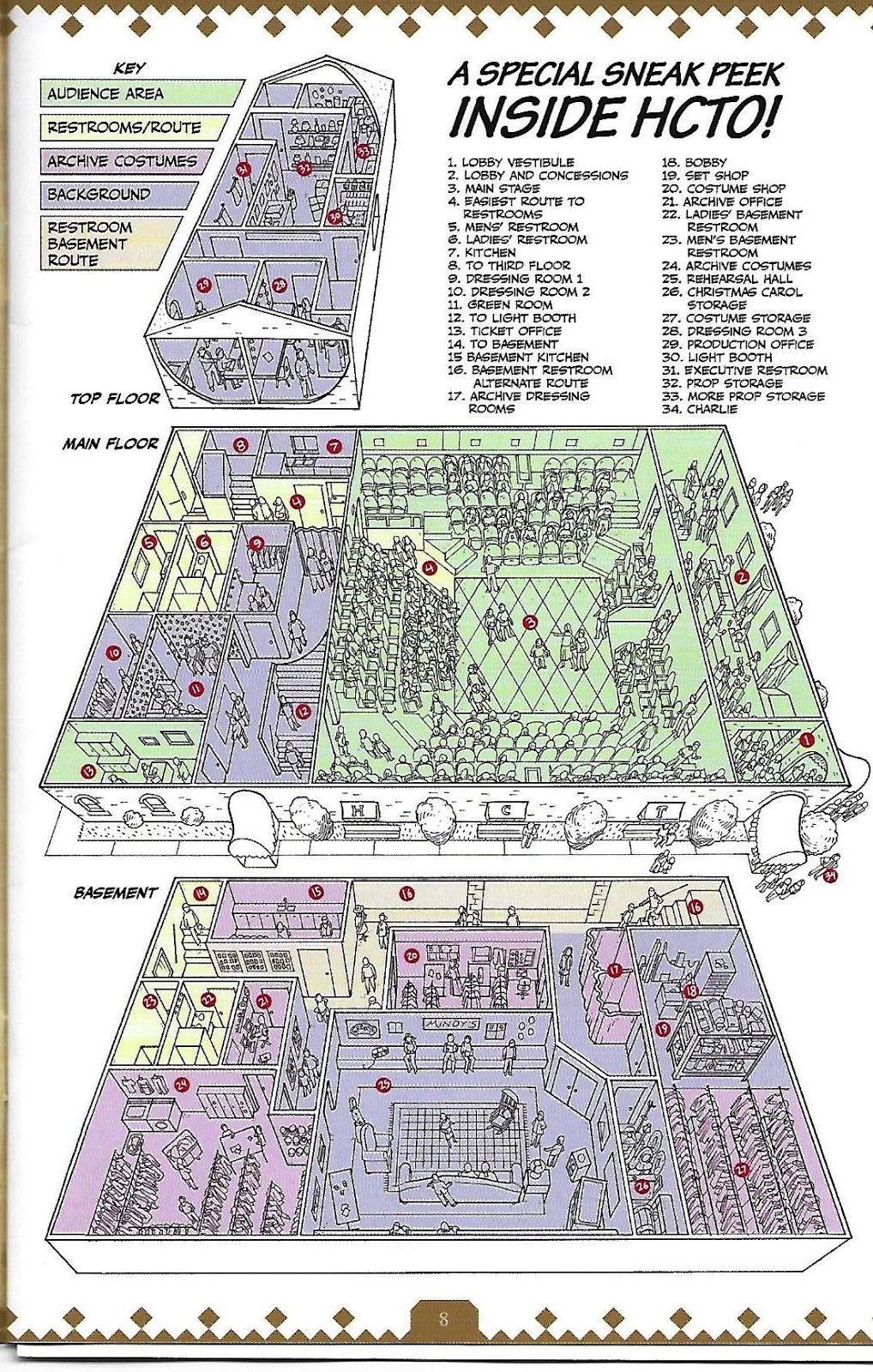
July, 2010. "Why would you travel to Orem, Utah, of all places, to
see 110 in the Shade?" you ask.
"Give me one good reason." I can do better. I can give you two good reasons: Audra McDonald and
Will Swenson, by this time a couple, performing in a special two-week
fundraising engagement for the Swenson family "store," the Hale
Center Theater Orem. Let's face it, the prospect of seeing McDonald recreate
Lizzie Curry in an intimate, 300-seat in-the-round theatre was simply not
something I could pass up, so I ordered tickets literally moments after they
became available to the public and was rewarded with second row seats. I could
literally touch McDonald when she played some of her scenes. Luminous as
always, she tailored her performance to the space and took care not to
overwhelm the production, but still delivered an all-out star turn. When she
sang those final notes in "Old Maid," you could literally feel the
audience holding its collective breath and then bursting into rapturous
applause as the first act came to a close. A year earlier, we saw Swenson in
his Tony-nominated performance as Berger in Hair,
and he's a sexy, talented man. Here, he's still sexy and still talented, and
his easy rapport with McDonald was undeniable, but I felt his performance was a
bit muted, affecting, but muted. (For the record, both Steve Kazee and Will
Swenson were excellent Starbucks, but neither gentleman quite matched the
animal sexiness and vocal prowess of Signature's Matt Bogart.) Nicely staged,
beautifully lit and effectively designed, this was not merely the Audra and
Will show. They were supported by a cast of eighteen actors who, without
exception, met the high bar set by McDonald and Swenson. One criticism: the
show used a recorded track, but one that was actually controlled by the
conductor, which gave the actors the leeway to actually perform the numbers,
but which, at times, sounded undernourished and tinny. The Hale Center Theater
Orem itself is comfortable and a lovely venue to see a show. We were enchanted.
– at the Hale Center Theater Orem, Orem, Utah.
Sidebar: As I mentioned above, the HCTO is
the Swenson family "store," part of a small theatre chain founded by
Will Swenson's grandparents. Will's brother is one of the managing directors.
Now, we wore our Roundabout 110
tee-shirts at the performance. During the intermission, a man introduced
himself as Will's brother and asked if we'd seen the show in New York. I said
"yes" and told Cody Swenson that Bob and I had come from Chicago to
Orem specifically to see Audra and his brother. I congratulated him on a
terrific show so far and returned to my seat. Later, hanging out at the stage
door, some of the ensemble came out, saw us in our 110 tees, and said, "Are you the Chicago boys?" Huh?
Apparently, we had become somewhat of backstage celebrities. Charming young men
and women, many going into their senior year at Brigham Young University.
"Will and Audra want to meet you," said one. And so we met them.
Lovely, gracious folks and just genuinely pleased we would come such a distance
to see them and support the theatre. A wonderful ending to a wonderful evening.

Really intimate space. Much smaller than Marriott in Lincolnshire.

But....lots of lights.

Jeff with Jared Young. He played Jimmy Curry.

Will...handsome and personable.

Jeff and Audra. I resisted the temptation to genuflect.

Bob with members of the really talented ensemble. Look at those young faces, not yet scarred and disillusioned by the industry. I wonder how many of them are still acting?
And the newest member of the Top Ten
Club….
# 7: TITANIC – Book by Peter Stone,
Music and Lyrics by Maury Yeston
(revised) The pre-opening buzz was lethal. The technical problems were
legion, frequently stopping the show mid-performance. Preview walkouts were
numerous. The ten-million-dollar show didn't have an iceberg's chance in hell
and most critics and theatre columnists predicted the show, like its namesake,
would sink at its opening performance, if it made it there at all. But despite
a legendarily hellish preview period, vicious pre-opening press on a daily
basis, and neutral-to-negative notices, Titanic proved
everyone wrong by winning five Tony Awards two months later, including Best
Musical, Best Book of a Musical and Best Original Score, and ended up with a
respectable, if, unfortunately, unprofitable, run of over 800 performances. It
perhaps will never again receive a production like its original one, and maybe
that's a good thing, but over time, the show has proven that first impressions
can often be wrong and has become somewhat of a cult musical, admired for both
its faults and for its magnificent virtues. This is not a perfect show. In
the original production, it seemed long with too many characters, too many, at
least, to keep track of and care about. In its original production at the
Lunt-Fontanne, the storyline of 2nd Class passenger Alice Beane bordered
precariously on being unsympathetically annoying. The character became less
grating in the joyous staged concert version, but it took the scaled-down
chamber version we saw at London's Charing Cross Theatre to finally put Alice
Beane into focus. She's still not the most sympathetic character, but, you
understand her almost desperate attempt to be more upwardly mobile than she is.
Finally, I got Alice Beane. The
number that I'm sure the creatives thought would be the takeaway hit song,
"Still," while certainly touching, has never particularly moved me.
But then…ah, but then. Let's be honest. The sinking of the Titanic is
still, over one hundred years later, a story that intrigues and captures the
imagination of so many people. It's a human story of greed, hubris, ambition,
love, bravery and courage that still resonates. Titanic's story
shows us people at the best and at their worst. We, perhaps despite ourselves,
get involved with this familiar story. We know some of our favorite characters
will die, yet we still want the outcome to be different. And at the end, we are
moved. And that's primarily due to Peter Stone's book and Maury Yeston's
magnificent score. If you haven't listened to the cast recording lately, spend
some time listening to the musical glories of this show. There are many
treasures there, but none as great as the opening sequence of music that is the
most thrilling opening of any show I've seen. This show beat the odds. For that,
we should be thankful.
Sidebar: For the record, my other top
favorite openings are "Ragtime" from Ragtime,
"Willkommen" from Cabaret (1998), "Walk Him Up
the Stairs" from Purlie and the opening of Follies up to and including
"Beautiful Girls."


(edited from an earlier post)
December, 1998. As mentioned earlier, Titanic pretty
much confounded its critics and not only won a bunch of Tony Awards, but also
acquired a sizeable number of devoted fans and embarked on a very respectable
two-year run. We saw this about twenty months after its opening. By then the
show had long settled into its berth at the Lunt-Fontanne (sorry…I'll stop the
shipboard references now) and the largely replacement cast of seasoned Broadway
pros brought this sweeping tale to life. In the reviews, much was made of the
intricate, yet not particularly opulent, scenic design…I suspected most
reviewers were disappointed it wasn't more luxe...but I found the use of levels
to reflect the various decks and the shipboard hierarchy to be
effective. Most impressive was the scenic coup de théâtre in the First Class
Smoking Room as the hydraulics worked overtime and furniture and actor Matthew
Bennett, playing Titanic's architect, Thomas Andrews, tilted and
slid offstage representing the ship as it sank. Really quite brilliant. Least
impressive, the scenic "what-the-hell-were-they-thinking" use of a
miniature Titanic zipping along the upstage wall at the
conclusion of Act One, then disappearing offstage with a crash, symbolizing, I
assume, the collision with the iceberg. Really rather silly and it elicited
more than a few laughs, not the reaction the designers were aiming for, I
suspect. In an otherwise elegant production, it was quite cheesy. The opening
sequence soared; Martin Moran and Clarke Thorell shone in their duet "The
Proposal/The Night was Alive;" John Cunningham provided years of Broadway
experience as a noble Captain Smith; Adam Pelty made the most out of the eerie
and prophetic "No Moon;" Jennifer Piech, Theresa McCarthy and Emily
Loesser, daughter of composer Frank Loesser, were notable and feisty as the
three Kates. Unfortunately, I felt Kay Walbye's Alice Beane was cloying and how
much of that had to do with the performance itself and how much of it had to do
with the writing of the part is debatable. I will say, however, that in the
staged concert version, the character came across better. For the record, the
Lunt's balcony is painfully tight. Poor Bob's leg were crushed. We took empty
seats in the orchestra for Act Two. – at the Lunt-Fontanne Theatre, New York


(edited from an earlier post)
February, 2014. Manhattan Concert Productions presented this. These are
the same folks who produced last season's breathtaking concert edition of Ragtime.
Last year's performance bordered on a religious experience; this year was no
different. It was simply magnificent; a feast for the ears and the soul as
Peter Stone and Maury Yeston brought the legendary tragic saga of the
ill-fated R.M.S. Titanic to a human level, devoid of the
special effects and stereotypes of James Cameron's much-lauded film. (Lest you
get the wrong impression, I quite like Mr. Cameron's film. But it's often more
spectacle than story.) From Captain to First Class Passenger to the Bellboy,
director Don Stephenson and music director Kevin Stites gave us characters we
may have loved or hated, Bruce Ismay was really a despicable human being, but
we were interested in all of them and cared about many of them. This is not a
perfect show. Not every number lands: the Strauses' "Still," ably
sung by Alma Cuervo and Ron Raines, tugs at our emotions, but doesn't quite
touch us the way the authors intended; "I Give You My Hand," a
beautiful song cut during Broadway previews, is pretty to listen to, but seems
grafted onto the proceedings; "Mr. Andrews' Vision," while powerful,
perhaps could have better made it's point in a frantic spoken monologue. But,
then, ladies and gentlemen, there is that opening sequence: a glorious
experience that ranks as one of musical theatre's most singular opening numbers.
According to the program, seven pieces of music make up this opening, ending
with the goosebump-inducing "Godspeed Titanic," which also brings the
show to its triumphant conclusion. It's a marvel of acting, singing, and, even
in this concert setting, staging. Like last year, a 250-strong chorus added an
extra thrilling element to the ensemble numbers. Many of the original cast
members returned to reprise their roles and they were all greeted with
enthusiastic "welcome home" entrance applause. This remarkable cast
included, in addition to Ms. Cuervo and Mr. Raines, Michael Cerveris, David
Constabile, John Bolton, John Cunningham, David Garrison, Jill Paice, Michele
Ragusa, Ryan Silverman and other talented Broadway pros. Top honors, though
went to David Elder as Frederick Fleet with a haunting "No Moon" to
close Act One, Joseph Castinado, a high school junior, whose excitement at
being in this production in the role of Bellboy was positively contagious and
totally endearing, but most especially to Brian d'Arcy James (Frederick
Barrett) and Martin Moran (Harold Bride) whose duet of "The Proposal/The
Night Was Alive" stopped the show cold and when they appeared together at
bows, brought the already loud and enthusiastic applause to a deafening roar of
cheers and bravos. My good pal, Gina, joined me and she remarked that she'd
seen nothing quite like this. I agree. - at Avery Fisher Hall, Lincoln Center,
New York


May, 2016. This is the production that catapulted Titanic from Honor Roll status to my #7 show. A textbook example of "less is more," this was the
second preview of a return engagement of 2013's ecstatically-received Southwark
Theatre's chamber-sized Titanic. This
is one of my favorite shows and this intimate version, minus the bells and
whistles of the Broadway original, told its tale with almost heartbreaking
humanity. Spare in design, yet lit to death, to great effect, the seven-piece orchestra
(2 keyboards, a violin, a viola, a cello, a bass and percussion) was rich and
full. The deceptive sparseness of the production (the set was simple, but so
very versatile) let director Thom Southerland concentrate on the story and its
characters. Sometimes bells and whistles and fancy stuff get in the way of
storytelling. The cast of twenty worked with clarity and focus and brought this
familiar story to life. With vivid performances and thrilling singing, I have
to admit that even this old curmudgeon was teary-eyed several times throughout
the evening. Absolutely sensational. Godspeed, Titanic! - at the Charing Cross Theatre, London
And so we come to the end of another installment. See you soon!
©
2017Jeffrey Geddes


