Friday, January 9, 2015

ALPHABET SOUP (5) - A RANDOM LETTER OF THE ALPHABET AND FIVE RANDOM SHOWS!

ALPHABET SOUP (5) -
A RANDOM LETTER OF THE ALPHABET AND FIVE RANDOM SHOWS!

To start off 2015, let's shake things up again, draw a letter from my blue London coffee mug and pick the first five shows from that letter's pile of programs.

And the first letter of 2015 is ….
R


And away we go!

R.S.V.P. BROADWAY – Winter Garden Theatre, Toronto


March, 1997. I rather enjoyed this musical spoof of 1930s New York. With a book and lyrics by Barbara D'Amato and Tony D'Amato and music by Tony D'Amato, this puff pastry of a show sported a ridiculous plot involving a gangster (character name Burns Rubenstein), a Broadway leading man (character name Noel Starr), a naïve girl who wants to be a Broadway star (character name Betty Bounce) and other characters that I frankly can't remember (one of the character names was, wait for it, T. Terrance Terrance and no, I'm not making any of these up!), a pleasant 1930s-flavored score that was so forgettable that you couldn't hum a bar past that number's applause, a spiffy Art Deco set, a lively orchestra, fun costumes, and a talented cast headed by Dirk Lumbard and Jean Louisa Kelly, neither of whom include the show in their resumes and/or Wikipedia articles. The audience was sparse at the performance we attended. Plans to take the show to New York were aborted when the show closed prematurely during its Toronto engagement after receiving negative reviews and poor box office. A video clip on Vimeo is almost painful to watch. Having said all that, however, in performance it was fun, funny,  and well-done. Not Broadway caliber by any standard, but enjoyable nevertheless. I'm surprised it hasn't become a community theatre staple.
Sidebar: The true star of the day wasn't what was onstage, but the theatre itself. Built in 1913 as a double-decker theatre, the Winter Garden is built on top of its downstairs neighbor, the Elgin Theatre. We have toured this marvelous place twice and will likely do it again next time we're in Toronto. We both love theatres…their rich histories and individual personalities, and, yes, theatres have personalities.


THE RITZ – Longacre Theatre, New York


Don't these ticket prices want to make you cry? $10.00 full price? Sigh!


Note F. Murray Abraham's elevated billing. 

June, 1975. When The Ritz opened in 1975, its setting in a gay New York City bathhouse was daring and I'll bet a lot of people went to the show thinking they would get the goods on all the tasty and illicit goings-on that happened in a gay New York City bathhouse. If that was the impetus, those folks left the Longacre very disappointed. Granted, there was plenty of towels and half-naked men, including future Oscar-winner F. Murray Abraham and future TV and film star and admitted sexual deviant Stephen Collins (back when he was smoking hot), and granted there was lots of gay double-entendre, wink-wink humor, but in reality it was all rather innocent and PG-rated, even for 1975. This play helped establish Terrence McNally as a playwright to be reckoned with but, like a lot of early McNally, is an uneven work. Directed by Robert Drivas, designed by Lawrence King, Michael H. Yeargan and Martin Aronstein and starring a magnificently hysterical Rita Moreno, in a Tony-winning performance, Jack Weston, Jerry Stiller, the aforementioned Abraham and Collins, Ruth Jaroslow and George Dzundza, the play was a laugh-filled romp that mostly glided over the flat spots and gave its audiences a grand old time. Moreno's "performance" in the bathhouse's cabaret room remains one the funniest scenes I have ever seen onstage. Absolute scenery chewing at its finest.
Sidebar: My seat location was in the third row on the aisle for this June Sunday matinee performance. During Moreno's cabaret scene, I was laughing so hard and for so long that Moreno actually came downstage, pointed to me and simply said, "You…in the third row," and then gave me a Googie Gomez glare, which, of course, only made me, and the rest of the audience, break down in laughter again. Perfectly in character and such fun.

October, 1975. Stubby Kaye and Mike Kellin, replacing Messrs. Weston and Stiller, respectively, were now above-title billed with Moreno. F. Murray Abraham's billing went from "with (in alphabetical order)" to "Also starring" and a font the same size as McNally's. Stubby Kaye's distinctive talents brought a different perspective to the role of Gaetano Proclo, the guy running from the mob who hides out at The Ritz. A bit more of an overt comic, it was played broader, and though an excellent performance, I rather missed Weston's cluelessness. The performance now played by an almost entirely new cast of principals, with the exceptions of Moreno, Abraham, Christopher J. Brown and Larry Gilman, was as funny and delightful as the first time I saw it. Great fun, now very, very dated.
Sidebar: A product of a pre-AIDS time, The Ritz has not aged well. A 2007 revival by Roundabout Theatre was not especially successful and the 1976 movie was pretty awful, even with Rita Moreno, Jack Weston and F. Murray Abraham recreating their original roles. I'd like to say that with the right cast, the right venue and the right director, it could be a successful period piece, but, although I am very fond of the show, it's just not that strong of a script. Happily McNally has gone on to much better plays. Fun factoid: producer Adela Holzer was sent to prison not once, but twice. Once for swindling theatre producers and another time for a scam involving immigrants. Gotta love it!

ROMANTIC COMEDY – Barrymore Theatre, New York


February, 1980. Poor Bernard Slade. His Broadway debut, Same Time, Next Year, was a multi-year smash, toured extensively, and, for a time at least, was a regional/community theatre favorite. His subsequent Broadway efforts were less successful, with his final entry, barely seven years after his debut, closing on opening night. Romantic Comedy was the most successful of the post Same Time, Next Year plays and ran just shy of one year. I remember this as being a funny and enjoyable evening, if not exactly memorable, smartly designed and capably directed and featuring a supporting cast that included the wonderful Carole Cook, Holly Palance (daughter of Jack), Deborah May and Greg Mullavey (of Mary Hartman, Mary Hartman fame). Anthony Perkins and Mia Farrow were the above-title stars and delivered the comic and star-wattage goods. The show may be best remembered for Anthony Perkins' full nudity in the first scene as he greets Mia Farrow. It's never been reported what Ms. Farrow thought of Mr. Perkins' junk, but his backside, which was the only side we in the audience saw, was agreeable enough, not perky, mind you, but perfectly acceptable. The joke line that accompanied Ms. Farrow's entrance got the evening off to a laugh-filled start. A moderate success that closed shortly after Perkins and Farrow left the show, this is a comedy that time, or at least Samuel French licensing agreements, has forgotten.

RABBIT HOLE- Biltmore Theatre (MTC), New York
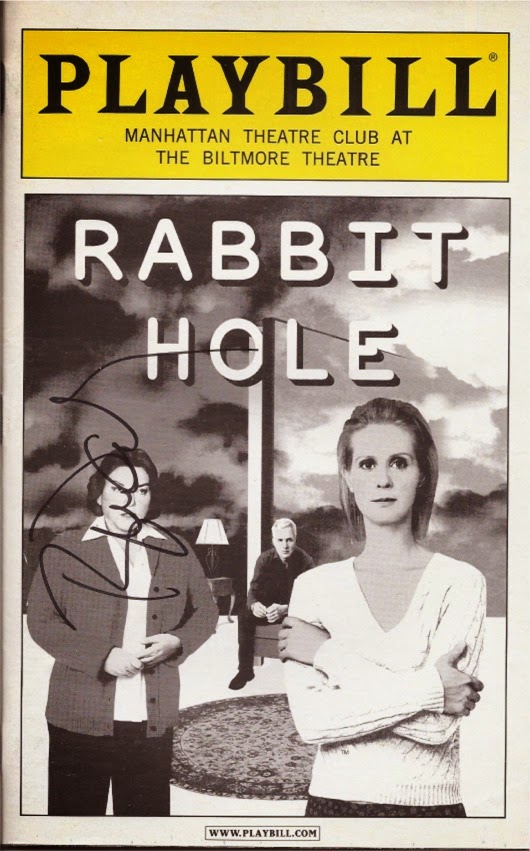


April, 2006. Final performance. I was very surprised to discover that the critical community did not universally embrace David Lindsay-Abaire's stunning play, Rabbit Hole. Some even compared it to a movie-of-the-week and a sappy one at that. In my opinion, nothing could be further from the truth. Lindsay-Abaire's 2007 Pulitzer Prize-winning examination of grief and how one heals emotionally after a devastating loss, in this case the accidental death of a young child, certainly tugged unabashedly at the heartstrings, but did so with truth, subtlety and humor. It resonated with me, remembering the journey my parents sadly had to take after the sudden death of my older brother at age 42 after he suffered an aneurysm and the difficult emotional upheaval I faced only five years later when Steve died at age 43 from AIDS. From a stunning physical production (scenic design by John Lee Beatty, costume design by Jennifer von Mayrhauser and lighting design by Christopher Akerlind) to Daniel Sullivan's sensitive direction to the powerful ensemble acting by Cynthia Harris, Tyne Daly, John Slattery, Mary Catherine Garrison and John Gallagher, Jr., this was moving and unforgettable theatre. You knew these people; you knew their quirks; you believed in their pain and sorrow. If I had to pick only one scene, it would be the bedroom scene between Cynthia Nixon and Tyne Daly. To witness the connection between these two outstanding actors was a privilege, but then, watching this wonderful play was a privilege.

RAISIN – 46th Street Theatre, New York (1974); Shubert Theatre, Chicago (1976)
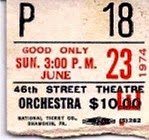


June, 1974. Raisin, the musical version of Lorraine Hansberry's sensational A Raisin in the Sun, a favorite of mine (I taught the play during my teaching internship, a prelude of sorts to actual student teaching) and without question one of the truly great American plays of the 20th century, was at its best when it stayed true to its roots and kept the action in the Younger household. When the musical tried to expand and "open up," it was less successful. At the time I saw the show, it was still enjoying the rewards of its Tony win as best musical of 1974 and the audience responded warmly, even affectionately, to the show. The glue of both the play and the musical was, and is, Lena Younger, the matriarch of the Younger clan, played with quiet dignity and an elegant simplicity by Virginia Capers, in a Tony Award-winning performance. Her performance alone was reason enough to see the show. The rest of featured cast, including Herb Downer, substituting for Joe Morton, Ernestine Jackson, Deborah (Debbie) Allen, Ralph Carter, Helen Martin, and Ted Ross, all contributed solid, professional performances. Where the show disappointed was in the score, which soared only in Ms. Capers' two solo numbers and otherwise was eminently forgettable. Enlarging the show to include ensemble and dance numbers didn't add much, if anything, to the show and added time to an already long show. I know this may sound as though I didn't care much for it, but in fact, I enjoyed it quite a lot, but, in large measure that was due to my love of the source material, Ms. Capers outstanding performance as Lena Younger, and Ms. Jackson's warm loving Ruth. Curiously, even though A Raisin in the Sun, has had two starry and hugely profitable limited-run revivals in 2004 and 2014, Raisin has pretty much faded from view. Perhaps in the case of A Raisin in the Sun/Raisin, less truly is more.
Sidebar: Even though Raisin won the Tony as Best Musical at the 1974 Tony Awards, it was more of a win-by-default, being the strongest of a relatively weak season for original musicals. For the record, I would have given Over Here! the trophy, but, while lots of fun, wasn't an especially strong show, either. Raisin was one of a handful of Tony-winning shows that never, well, caught on. It enjoyed solid, even sold-out, business at the start of its run, but then quickly ran out of audiences and, despite a run of over two years, closed at a loss. At its opening, it received everything from a rave to an outright pan, a spectrum of extremes not often encountered. Clive Barnes loved practically everything about it, while over at Women's Wear Daily, esteemed critic Martin Gottfried pretty much hated everything presented onstage at the 46th Street Theatre.

**********


A true prize! An intact ticket from the Shubert Theatre. While computerized systems and the Internet have made ticketing efficient and instantaneous, I still miss the days when you walked up to the box office (or, wait for it, mail order....pick three dates, include check or money order and a stamped self-addressed envelope. You had your tickets within days.) and watched as the box office treasurer skillfully picked out the best available tickets from the racks behind him/her. Have no idea how this escaped being torn by the ushers when we entered.


April, 1976. By the time the First National Tour of Raisin played Chicago, Tony-winner Virginia Capers had been elevated to above-title billing and in the Playbill, producer Robert Nemiroff made sure everyone knew of Ms. Capers' deserved win by billing her as 'Tony Award "Best Actress" VIRGINIA CAPERS.' Not particularly classy, but… I enjoyed the show in New York; I hated the show in Chicago. It was one of those evenings that occasionally occur in the theatre where due to any number of related or unrelated events, a performance is just plain bad. One of the factors, which was more of a sidebar than a factor, was my seat location in the second to last row of the Shubert's very steep second balcony, the only seats available, which was like watching the show from the fifth or sixth floor. If memory serves, the show went up very late, as in twenty minutes or so, with no explanation from management. (Note to theatre managers: very late curtains produce very feisty audiences. Make up something if you have to, but keep your audience informed.) The show, which is relatively intimate, seemed lost in the Shubert. The cast, though talented and capable, lacked energy and seemed to be marking time. Worst of all, though, was Virginia Capers' performance. Oh, on the surface she was doing everything right and then some, but you could tell her heart wasn't in it, as though after well over two years of playing Lena Younger, she was just over it. Perhaps they had had a bad week. Perhaps the late curtain threw everyone off their game. Perhaps they hated being in Chicago. Whatever the case, my friends were hating every minute and since watching a desultory performance from a crappy seat wasn't anyone's idea of a good time, we, along with quite a few fellow folks in the second balcony, bolted at the interval. We went to the Bistro instead.

That's it for now. Stay warm. More later.
© 2015 Jeffrey Geddes

Thursday, December 4, 2014

MUSICAL MAYHEM: MY TOP TWENTY-FIVE MUSICALS The Honor Roll - Part 3

MUSICAL MAYHEM: MY TOP TWENTY-FIVE MUSICALS
The Honor Roll - Part 3

Some more musicals from the fifteen shows that make up my musical Honor Roll. Lots to talk about, so sit back, pour some coffee and let's begin.

THE SCOTTSBORO BOYS - Music and Lyrics by John Kander and Fred Ebb, Book by David Thompson
This is what I posted on Facebook the day after we saw The Scottsboro Boys  in New York. "Listen up, people! If you care about musical theatre at all, you MUST get to New York before Sunday and catch one of the remaining performances of  The Scottosboro Boys  at the Lyceum Theatre on W. 45th. We saw it on Wednesday and it was one of the most thrilling theatrical performances I've seen in years. It's closing far, FAR too soon. This is a must-see!!!" And it remains one of the most thrilling pieces of theatre, musical or otherwise, that I have seen. Based on a true story, this bold work by David Thompson, John Kander and Fred Ebb  tells of a horrific miscarriage of justice based on irrational fear, racial intolerance, and popularly-held stereotypes. The frightening thing is that this type of bigotry, ignorance and narrow-mindedness is still prevalent in the United States and even celebrated, so this show is not only a indictment of our past, but also a cautionary tale of what could conceivably happen again. The show received mixed reviews when it opened at the Lyceum Theatre and closed after a far-too-brief run. It was nominated for twelve Tony Awards, but had the misfortune of opening in the same season as the juggernaut called The Book of Mormon and didn't win a single award, giving The Scottsboro Boys the dubious distinction of having the most nominations in Tony history without winning in a single category. A sad commentary. A brilliant, touching, wonderful musical.


December, 2010. We saw The Scottsboro Boys just a few days before it closed after a too-brief run. There was an air of excitement and anticipation throughout the sold-out theatre. When the lights dimmed and the orchestra began playing and the cast took their places, the audience erupted into prolonged and loud applause. We were there to celebrate them and we wanted to make sure everyone involved in the show knew it. The entrance applause was nothing, however, compared to the ecstatic standing ovation that just did not want to let the cast go. I was hoarse from cheering and my hands hurt from applauding. The love in that theatre was palpable on both sides of the footlights. Beowulf Boritt's deceptively simple set of backdrops and chairs served as a railway boxcar, a theatre, a courthouse, a jail and a bus in Montgomery, Alabama, while Ken Billington's brilliant lighting design changed the mood of the show with the execution of a light cue. Director/Choreographer Susan Stroman thrillingly staged the show within the framework of a minstrel show, a choice that brought her a considerable amount of criticism, but one that was absolutely correct. Without a single discernible misstep, this is, in my opinion, her finest work, easily topping her wildly praised jobs on The Producers and Crazy for You. Performed by a sensational cast of actors, this was a true ensemble piece. So it is with the utmost respect and admiration for the entire cast, that I single out  these three actors: Joshua Henry, John Cullum and especially Sharon Washington. As Haywood Patterson, the "leader," for lack of a better word, of the Scottsboro 9, Joshua Henry brought a magnetic, dynamic and an unshakeable certainty of the innocence of the Scottsboro 9 that was the glue of the piece. Theatre legend John Cullum's portrayal of the Interlocutor easily demonstrated why he has won two Tony Awards and is on everybody's "A" list when it comes to actors of a certain age. Oozing with oily, malevolent charm, he commanded the stage with his every appearance. His last appearance, where the Scottsboro Boys refuse to join him in his racist cakewalk, was chilling. But it was Sharon Washington's  The Lady that made the most impact. Although she only spoke a few words at the very end of the show, her quiet dignity and her moments of absolute stillness  gave an added depth of humanity and warmth to the show. And when she finally said her lines which, for all intents and purposes, ended the evening, it provided a powerful conclusion to The Scottsboro Boys. It is truly magnificent. - at the Lyceum Theatre, New York


June, 2012. We were on the West Coast to see the revival of Follies in Los Angeles and decided to make a stopover in San Diego when we found out The Scottsboro Boys was in its final performances there. With the original design team recreating their original work and Susan Stroman once again at the helm, this was a replica of the Broadway production. This production featured some members from the original New York cast  in addition to Ron Holgate as the Interlocutor. Holgate, a Tony Award winner for the original production of 1776, has a different style and skill set than John Cullum and Stroman wisely directed him to use his particular strengths to create a different, yet solidly effective Interlocutor. This time around Clifton Duncan played Haywood and C. Kelly Wright was moving as The Lady. If anything, the how made a bigger impact in San Diego than in New York, possibly due to the size of the respective theatres. While the Lyceum in New York is a smallish Broadway house seating just under 1000, the Old Globe is a much more intimate space, seating approximately 600, so the action just seemed more immediate, more powerful. We were fortunate to be at a performance that featured a post-curtain talkback (for the record, I love talkbacks) and it was exciting to see how many people stayed and interacted with the cast. A classy production of a show that should be on everyone's bucket list. - at the Old Globe Theatre, San Diego

**********

THE APPLE TREE - Book, Music and Lyrics by Sheldon Harnick and Jerry Bock with additional book material by Jerome Coopersmith
The Apple Tree, Harnick and Bock's musical of three one-acts, is decidedly a mixed bag in tone and, frankly, quality. But there is an irresistible charm to the show that makes the most out its considerable virtues and downplays its flaws. Written with the intention of having the same three leads play the more or less equivalent characters in each of the three acts, it's a wonderful vehicle for actors to show off their range and versatility. The "star" of the three pieces is its first act, "The Diary of Adam and Eve," based on a story by Mark Twain. In this piece, everything comes together. The book is gentle, yet often very funny and, ultimately, quite touching. The score mirrors the qualities of the dialogue and concludes with a remarkable ballad called "What Makes Me Love Him," which is as pretty a song as one could hope for. The second act, "The Lady or the Tiger," based on a story by Frank R. Stockton, is paper-thin, but is accompanied by a jaunty score that includes a torchy "I've Got What You Want"…absolutely delicious. The third act, "Passionella," based on a story by Jules Feiffer, is, perhaps unfairly, most noted for a lightning-fast costume change, but is really a rather smart swipe at the artificiality of fame and our attraction to it. Even though all three of the playlets had distinct pleasures, the consistency just wasn't there, with the first act obviously the strongest, the third act the most fun and the second act the throwaway. It was Harnick and Bock's follow-up show to their smash Fiddler on the Roof and the critics were respectful and the show itself received generally very positive critical notices. In her three roles, Barbara Harris gave an iconic performance that is the stuff of legend, if the critics and archival material are to be believed. I feel, however, it's more than just a moderately successful show that is best known for the 1-2-3 punch of the Eve-Barbara-Ella/Passionella leading lady roles. The Apple Tree has a delightful, underrated score that deserves to be more than a footnote to the Harnick and Bock catalog and three stories that will entertain and sparkle with the right cast and director. I'm a big fan. (I also played the Snake, Sanjar and George L. Brown, the anti-Flip, in a community theatre production back when the earth was still cooling. Had a blast!)


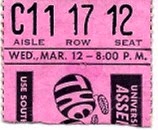
The U of I Assembly Hall

March, 1969. To my knowledge, this was the only national tour of The Apple Tree. If there were other companies touring the country, none of them played Chicago. Tom Ewell, of The Seven-Year Itch on stage and especially on film, was the top-billed star, but it was probably second-billed Rosemary Prinz who was the bigger draw at the box office. Prinz had just finished a twelve-year run as Penny Hughes in As the World Turns and was, at the time, a household name. She was out that night and Brenda Gardner, her understudy, filled in for her. According to the many notes I scribbled in my program, I thought she was tentative and a bit underwhelming vocally. She got better as the evening progressed, but it was nothing more than a competent, professional job. (To be totally fair to Ms. Gardner, I was a callow lad of 18 at the time and totally besotted with the original cast album, especially Barbara Harris' performance on it. I probably would not have liked anyone except Barbara Harris, so my thoughts on Ms. Gardner's performance should be taken with much more than a grain of salt.)  Will Mackenzie, who would go on to a great deal of success as a television actor and director, played the Alan Alda roles with charm and talent and I liked him a lot in the roles. Most disappointing, however, was Tom Ewell in the Larry Blyden roles. Perhaps, six months into the tour, he was getting tired of schlepping from one small town to another. Perhaps he didn't like playing opposite an understudy. Perhaps he was just bored with it all. Whatever the case, he gave one of the worst performances I have seen in nearly fifty years of theatregoing. (Not the worst. That honor goes to Danny Kaye in Two by Two, but more on that in another post!) Listless, matter-of-fact with zero charm or charisma, he phoned in his performance. Dismal. My notes complimented the physical production and the orchestra and sound. Apparently, however, the audience was dead and unresponsive. Perhaps a reaction to Rosemary Prinz's absence? - at the Assembly Hall, University of Illinois, Champaign
Sidebar: Then, as now, bus and truck companies bring theatre to many smaller communities. Designed for mobility, these tours often play one- and two-night stands. Before many universities built state-of-the-art performing arts complexes, performances were often held in venues such as the Assembly Hall at the University of Illinois in Champaign, an architecturally significant building usually used for basketball and recently added to the Illinois endangered landmarks list, that is still home for the Broadway series. But thanks to some theatrical magic and very skilled technicians and stagehands, this vast arena was transformed into a perfectly acceptable performance space.


(an edited repost from an earlier blog entry)
December, 2006.  This was the first full-fledged Broadway revival of the show, not counting a 2005 Encores  presentation and I was super-stoked to see it. And although I had some major reservations as noted below, I wasn't disappointed.  Brian d'Arcy James, in the Alan Alda parts, is a first-rate and talented actor and was excellent in all three acts.  Marc Kudisch, in the Larry Blyden parts, was at his best as the Snake, but underused in the other two, a fault of the writing.  (I never said the show was perfect.)  Kristin Chenoweth, in the Barbara Harris roles, was the reason most of the audience was there and I'm sure she didn't disappoint the majority of them.  In my opinion, however, she was a case of diminishing returns.  In "The Diary of Adam and Eve," she was outstanding.  Warm, touching, funny.  In "The Lady or the Tiger?" she was getting a bit too broad.  In "Passionella," she was, well, just not funny.  It was all surface Kristin Chenoweth tricks and though "Passionella" is the broadest of the three acts and is somewhat of a cartoon, it's also a satire and needs to be played straight, but with a knowing wink.  Chenoweth was just out there madly chewing scenery and it hurt her overall performance.  Director Gary Griffin got a superb performance out of her in the first act, but sadly seemed to lose directorial control over her as the show progressed.  And that was a shame.  Had she been better directed, she could have been a worthy successor to the iconic Barbara Harris performance.  Quibbles aside, though, it was great fun.  - at Studio 54, New York


**********

SWEENEY TODD: THE DEMON BARBER OF FLEET STREET - Music and Lyrics by Stephen Sondheim, Book by Hugh Wheeler
I need to get this off my chest: even though Sweeney Todd has been performed by many opera companies at many opera houses throughout the world, it is not an opera. It is a musical. Full stop. It was written as a musical. It was first produced as a musical. It won a bunch of Tony Awards as a musical. It might have the epic qualities of an opera, but it has the heart of a musical and needs to be performed by actors who can sing, and admittedly sing very well, and not by singers who can act. There is a difference.  Let me try to explain. You can sing the crap out of Mrs. Lovett, but unless you have the acting chops to thoroughly delve into the depths of this complicated, charming and diabolical villain, all you have is a well-sung Mrs. Lovett. I'm not saying opera stars don't know how to act. Many of them do, but acting in an opera and acting in a musical are two similar, yet different, animals. It's rare for an opera star to convincingly straddle both worlds and vice versa. But whether you think, like I do, that Sweeney Todd: The Demon Barber of Fleet Street (to use its full name) is a musical or whether you think it's an opera or even whether you think it's an opera that thinks it's a musical or a musical that thinks it's an opera, the bottom line is that it doesn't matter. Any way you look at it, Sweeney Todd is one of the finest works written for the theatre in the past century. Personally, I prefer Follies, but I will not dispute the fact that this is Stephen Sondheim's masterpiece. This slice of Victorian Grand Guignol  delight has a rock-solid book by Hugh Wheeler to compliment Sondheim's soaring score  that ranges from broad comedy to chilling anthems of revenge to one of the most beautiful songs written for the stage, "Green Finch and Linnet Bird." The ugliness and violence of London in that era is more compellingly told and far darker and more realistically portrayed in Sweeney Todd  than the London of Lionel Bart's Oliver!, which takes place in roughly the same time period. You root for Sweeney Todd and Mrs. Lovett even though you know these are bad people…or are they really very moral people who do whatever they feel needs to be done in order to survive, repay old debts and, by killing the totally reprehensible Beadle and Judge, actually make the world a tiny bit better? It's not a happy show, though you will laugh throughout "A Little Priest," but it's invigorating show of uncompromising quality that will make you think while it entertains you.


March, 1979.  The show had opened earlier that month to largely favorable reviews, though, not unsurprisingly considering it's a Sondheim show, not every critic was a fan. This "critic," however, was and is. Upon entering the Uris Theatre (now the Gershwin), a theatre that thinks it's an airplane hangar, scenic designer Eugene Lee's sensational set, made up of parts from abandoned foundries in New England, immediately set the tone. It was jaw-dropping and disturbing at the same time and when the shrill factory whistle blasted through the auditorium, you could feel the audience jolt to attention. From Larry Fuller's dance and movement to Franne Lee's costumes to Ken Billington's lighting to Jonathan Tunick's orchestrations to Paul Gemignani's musical direction, there was not a single production element that was not absolutely flawless. Harold Prince's direction was insightful, complex and yet accessible and told this story of revenge and redemption with a beauty and grace that makes Sweeney Todd quite possibly the highlight of his long and brilliant career. Staggeringly good performances by Victor Garber, Ken Jennings, Merle Louise, Edmund Lyndeck, Sarah Rice, Joaquin Romaguera and Jack Eric Williams brought the large cast of characters vividly and memorably to life. But it was Angela Lansbury and Len Cariou who, in career-defining performances, thrillingly anchored the proceedings and who effortlessly brought the gigantic Uris Theatre down to size. I've seen other productions of Sweeney Todd, but this, kids, was the real deal. Breathtaking. Simply breathtaking. - at the Uris Theatre, New York

August, 1979. Several months into the run, the show was as fresh as my first viewing of it. Cris Groenendaal had replaced Victor Garber as Anthony. (Garber was soon to go into rehearsals for the First National Tour of They're Playing Our Song.) Still stunning. Still magnificent. - at the Uris Theatre, New York

February, 1980. Len Cariou and Angela Lansbury were leaving the show at the end of the week, but their performances were still opening-night fresh and effortless. Betsy Joslyn had replaced Sarah Rice as Johanna. I was in New York to perform for an association of word processing professionals. (Remember word processors?) My fellow castmates were all associated with Waukegan Community Players, the community theatre group in my hometown of Waukegan. I'm not quite sure how our author and star got the gig, but it paid well, was great fun, and was an excuse to play in New York. My best friend Pat and others in the cast joined me at the Uris. Pat thought it was one of the finest performances she had ever seen. No argument from me, Pat. - at the Uris Theatre, New York


March, 1981. When the first national tour of Sweeney Todd played Chicago, it was unfortunately housed at the ghastly Arie Crown Theatre, an inhospitable barn of a playhouse seating over 4300 people that made Sweeney's New York home, the Uris, seem positively intimate. For whatever reason, I assume it had to do with money and box office receipts, the Arie Crown was, for a while, too long a while in my book, the theatre of choice for many of the larger musicals when they played Chicago. This was unfortunate, because even the singular talents of Angela Lansbury and George Hearn could not overcome the liabilities of this huge space. Eugene Lee's brilliant set was slightly altered for touring (no trap doors or rising from the depths of hell in the touring production), but otherwise this was a faithful replica of the Broadway original with many of the final Lansbury/Cariou cast continuing in the show. Lansbury remained a marvel and George Hearn was a powerful and frightening Sweeney Todd. Don't get me wrong; the performances and producition were all top-notch, but I so wish the producers had booked the Shubert instead. - at the Arie Crown Theatre, Chicago


May, 1994. The Broadway original may be the gold standard by which all productions of Sweeney Todd can be  judged, but this 1993 chamber-sized (18 cast, 10 orchestra) version produced by Great Britain's Royal National Theatre is my favorite. The reason? Two words: Julia McKenzie.  Wildly praised for her interpretation of Nellie Lovett, her earthly, sensual performance was a master class in how to take an already iconic performance (originator Angela Lansbury, thrilling and incredible) and make it truly, absolutely, totally your own. Lansbury's approach was daffier, a bit flakier, a bit on the cutesy side which made her Act Two scene with Toby, where she decides he must be killed in order to keep Sweeney Todd from being exposed, so potent. McKenzie's approach was broader, sexier, with a obvious survivor's attitude which made the same Act Two scene as potent as Lansbury's but with an added quality of calculated evil that made you almost gasp in despair because, up to that point, despite Mrs. Lovett's popping people into pies and the rest of her, let's be honest here, sociopathic behavior, you rather liked McKenzie's Mrs. Lovett. She was fun; she was funny; she was a Victorian good time. Plus McKenzie sang the absolute crap out of the score. In my book, this was and remains the definitive Mrs. Lovett. I am not alone in this opinion. I have read in several sources that Sondheim himself feels the same way. In fact, Sondheim has praised this production and its small chamber approach as being his original vision for the piece. As one would expect from the National Theatre, production values, though not as epic as the original, were top-of-the-line with a superb orchestra and a superb cast including Denis Quilley, who originated the role in the first London West End production in 1980. Seeing it in the intimate 890 seat Lyttelton Theatre made the entire experience powerful and unforgettable. Steve was ambivalent about seeing this, but he loved Julia McKenzie after seeing her in the London  production of Follies in 1987, so he was willing to give the show a try. He was a believer by the end of Act One. Highlight of the evening, however, had to be sharing a drink and a chat with Ms. McKenzie herself in the green room bar after the show. Classy lady; über-talented actor. - at the Lyttelton Theatre (NT), London


August, 2001. This semi-staged concert version originated in 2000 with the New York Philharmonic at Lincoln Center's Avery Fisher Hall, where it was recorded on CD. The following year it was produced in San Francisco, where it was taped for a PBS broadcast. In August, 2001, it played at Ravinia, Chicago's glorious outdoors concert venue in suburban Ravinia. Lonny Price's skilled direction gave a theatrical gloss to the proceedings. In the superlative cast were internationally acclaimed baritone Sherrill Milnes as Judge Turpin, Broadway veteran Davis Gaines as Anthony Hope, the wonderful Hollis Resnick as the Beggar Woman and Neil Patrick Harris (!!) as Tobias Rigg. But then, the icing on the cake:  George Hearn once again formidable and terrifying as Sweeney Todd and Patti LuPone as a deliciously amoral, comic and scary Mrs. Lovett. Add the glorious sounds of the large Ravinia Symphony Orchestra and a beautiful summer evening and, well, you have one magical evening. – at the Pavilion, Ravinia Festival, Ravinia, IL


October, 2005.  Director/Designer John Doyle's approach to having the actors also act as the orchestra was something revolutionary for Broadway, exciting and invigorating and yet, at the same time, somewhat unsatisfying, an opinion I would have a year later with his actors-as-orchestra production of Company. I had absolutely no quibbles about the talented and versatile cast of ten playing principals and chorus alike and the scenic, costume and lighting designs were all striking and original. What was missing, in my humble opinion, was the epic quality that the original certainly had, the chamber piece had and even the concert version had. For me, this flattened this wonderfully macabre tale and made it a little less, for lack of a better description, Sweeney Todd, if that makes any sense at all. Perhaps surprisingly, however, the music seemed fresher and more immediate and I credit orchestrator Sarah Travis for transforming Jonathan Tunick 's original orchestrations to perfectly fit this innovative concept and to perfectly showcase the musician talents of the cast. The casting of Pirelli as a woman didn't work for me, which is absolutely no reflection of Donna Lynne Champlin's performance. It was just a choice I didn't agree with. Special kudos to Mark Jacoby (Judge Turpin), Alexander Gemignani (The Beadle), Lauren Molina (Johanna) and Manoel Felciano (Toby). Top honors, however, go to Michael Cerveris, whose Sweeney was so charismatic and so downright hot, as in sexy hot, and yet so very, very frightening, and to Patti LuPone, whose Mrs. Lovett took on a completely different life from her Ravinia portrayal and gave us a very wry, very sardonic and the most cheerfully demented Mrs. Lovett I've seen. I enjoyed it quite a lot, yet this is my least favorite of the major productions I've seen of the show. On their first trip to NYC, our niece (age 16) and nephew (age 14) were not terribly impressed. – at the Eugene O'Neill Theatre, New York


September, 2011. A former student of Bob's was in the cast of this well-received production and that was the impetus for the trip to the 'burbs. This was an excellent production with terrific production values, superb singing and outstanding lead performances by NYC-imported Gregg Edelman and Liz McCartney that gave the show a Broadway sheen not often seen in Chicago regional theatre. The ubiquitous Rachel Rockwell did a fine job directing the show, keeping it more in the style of the original. Her penchant for "reimagining" and "reinventing" was only apparent in the decision to cast a young boy as Toby, a bold choice that, had director Rockwell taken the risk to go full-throttle with this approach, could have added a really disturbingly creepy element to the production. As presented, however, it was more Oliver! than Sweeney Todd and just had me bewildered. Overall, though, a solid production and well-worth the trip out to the hysterically decoratively overwrought Drury Lane. – at the Drury Lane Theatre, Oakbrook Terrace, IL

Whew!  That's it for now. Enjoy the week … and see a show.
© 2014 Jeffrey Geddes

CONCERTS AND TUNERS AND PLAYS…OH, MY! - vol. 1

  CONCERTS AND TUNERS AND PLAYS…OH, MY! vol. 1 Spring is finally here. And what better way to celebrate than by strolling down theatrical ...